

Description
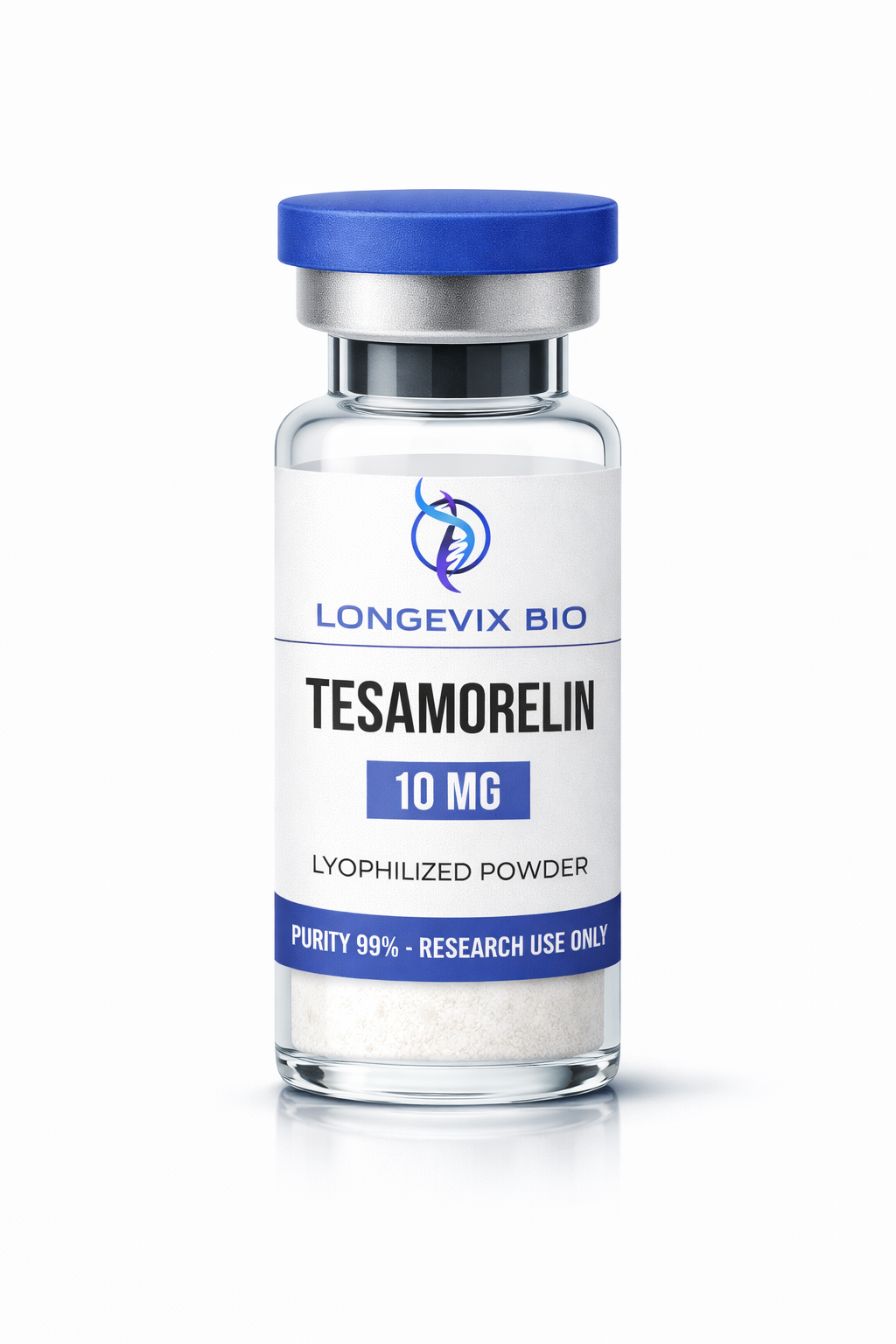
Tesamorelin — The FDA-Approved GHRH Peptide
What Is It?
It is a synthetic 44-amino acid polypeptide analogue of human Growth Hormone-Releasing Hormone (GHRH).
For research purposes only. Not for human consumption outside of approved clinical contexts.
How Does It Work?
Instead of supplying growth hormone directly — a strategy associated with safety concerns and unpredictable effects — tesamorelin prompts the body’s own pituitary gland to release growth hormone in a pulsatile, physiologic pattern. That increase in growth hormone subsequently raises levels of IGF-1, a hormone involved in cellular repair, metabolism, and body composition. Evergreen Institute
Whereas exogenous growth hormone can overwhelm normal feedback loops, tesamorelin essentially restores a more youthful hormonal rhythm — which may explain why it preferentially targets visceral fat without causing large shifts in total body weight.
It’s also worth noting what it doesn’t do: tesamorelin’s mechanism is specific to stimulating GHRH receptors and is not typically associated with significant increases in other hormones like cortisol or prolactin — making it a cleaner stimulus for GH release.
What Is It Being Studied and Used For?
🔥 Visceral Fat Reduction The flagship research area — and where the strongest evidence sits. Visceral fat — the deep abdominal fat that surrounds organs — is the most metabolically dangerous type and notoriously resistant to diet and exercise alone.
❤️ Cardiovascular Health A 2025 study concluded that tesamorelin can lead to a significant reduction in cardiovascular disease risk among people with HIV — a population whose likelihood of a cardiovascular event is twice as high compared to the general population.
💪 Muscle Quality Research has shown that among those with clinically significant reductions in visceral adipose tissue, tesamorelin was effective in increasing skeletal muscle area and density across multiple trunk muscle groups.
🫀 Liver Health In a clinical trial, tesamorelin reduced liver fat content and prevented liver inflammation and fibrosis progression. A Phase 2 trial in targeted NAFLD patients is also underway.
🧠 Cognitive Research Emerging research as of 2026 is exploring potential cognitive benefits, with studies suggesting it may improve executive function and memory — possibly through mechanisms like improved sleep quality and reduced neuroinflammation.
Reviews
There are no reviews yet.