

Description
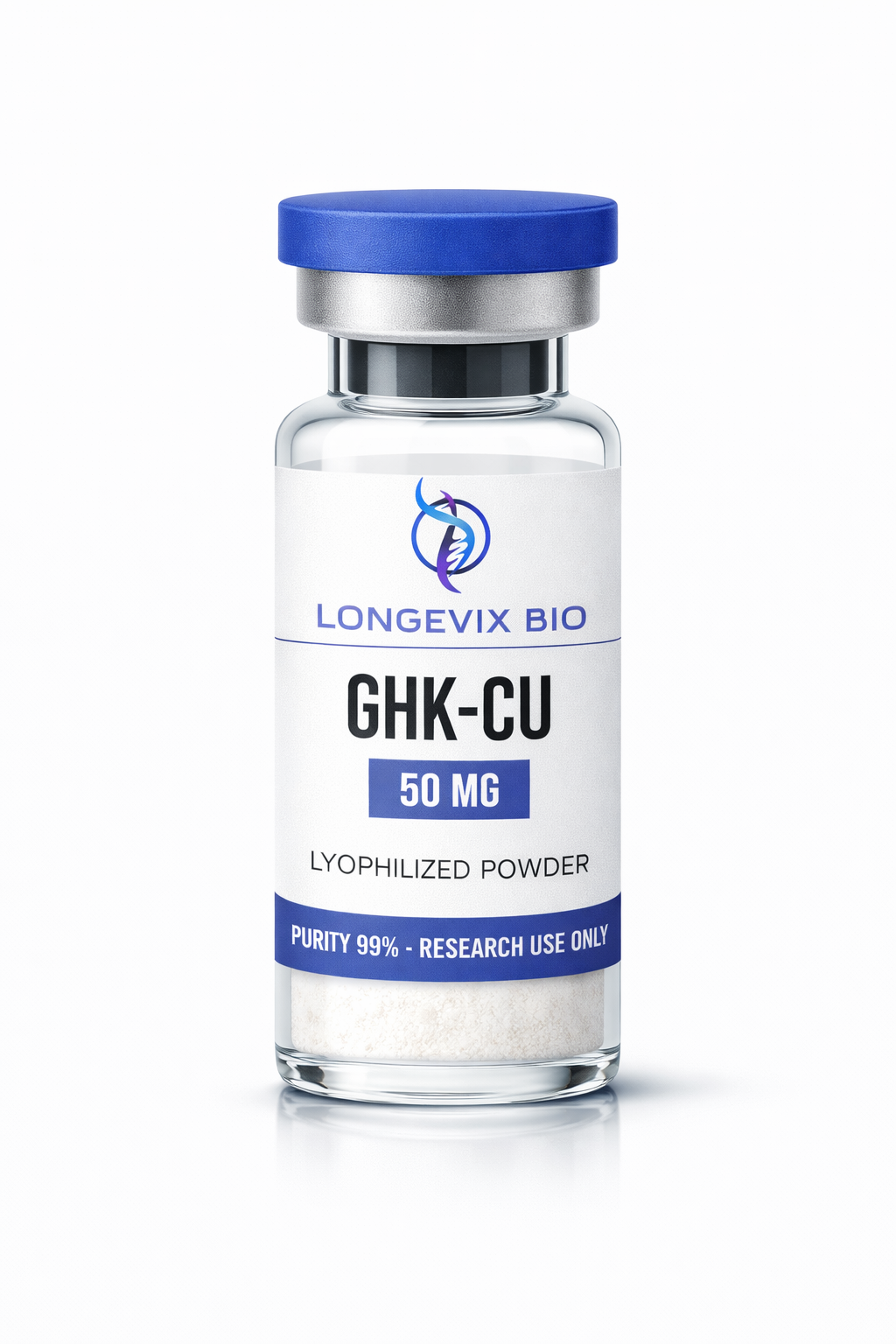
GHK-Cu — The Copper Peptide
What Is It?
GHK-Cu is a naturally occurring copper complex of the tripeptide glycyl-L-histidyl-L-lysine, first isolated from human plasma in 1973. It can also be found in saliva and urine.
What makes it particularly interesting is that it’s not just a synthetic research compound — it’s something your body already produces. Plasma concentrations of GHK decline sharply with age: from approximately 200 ng/mL at age 20 to roughly 80 ng/mL by age 60. That decline lines up closely with the body’s reduced ability to repair and regenerate tissue as we get older.
For research purposes only. Not for human consumption.
How Does It Work?
GHK-Cu has an unusually wide range of biological actions. It stimulates blood vessel and nerve outgrowth, increases collagen, elastin, and glycosaminoglycan synthesis, and supports the function of dermal fibroblasts. Its ability to improve tissue repair has been demonstrated across skin, lung connective tissue, bone, liver, and stomach lining.
What Are Researchers Studying It For?
✨ Skin Rejuvenation & Anti-Ageing This is where GHK-Cu has the most research behind it. In cosmetic products, it has been found to tighten loose skin and improve elasticity, skin density, and firmness, reduce fine lines and wrinkles, reduce photodamage, and improve hyperpigmentation.
🔧 Wound Healing Research indicates potential benefits in 40–50% acceleration of wound closure compared to control treatments, with enhanced healing of surgical incisions, traumatic wounds, and improved outcomes in chronic wounds including diabetic ulcers.
🔥 Inflammation Studies show that GHK-Cu reduces levels of pro-inflammatory cytokines such as IL-6 and TNF-α— making it relevant to research into inflammatory skin conditions and broader tissue recovery.
💪 Collagen & Tissue Remodelling At the extracellular matrix level, the peptide simultaneously stimulates synthesis of collagen, glycosaminoglycans, dermatan sulfate, chondroitin sulfate, and the proteoglycan decorin, while also upregulating metalloproteinase activity to degrade and remove damaged collagen. It essentially helps the body rebuild and clean up at the same time.
🦱 Hair & Scalp Research Some research suggests GHK-Cu may prolong the anagen (growth) phase of the hair cycle, and it is increasingly studied in combination with other hair restoration approaches.
🫁 Gut & Organ Health Over the past several decades, the efficacy of GHK and GHK-Cu in promoting tissue remodelling, anti-inflammatory properties, and antioxidant effects has been validated across diverse tissues including skin, airways, bones, skeletal muscles, stomach, and lungs.
🧬 Gene Expression & Longevity Research One of the most exciting emerging areas. GHK-Cu has been shown to stimulate release of growth factors such as brain-derived neurotrophic factor (BDNF), vascular endothelial growth factor (VEGF), and bone morphogenetic protein 2 (BMP-2). Its broad influence on gene expression has made it a subject of interest in longevity and cellular ageing research.
Reviews
There are no reviews yet.