

Description
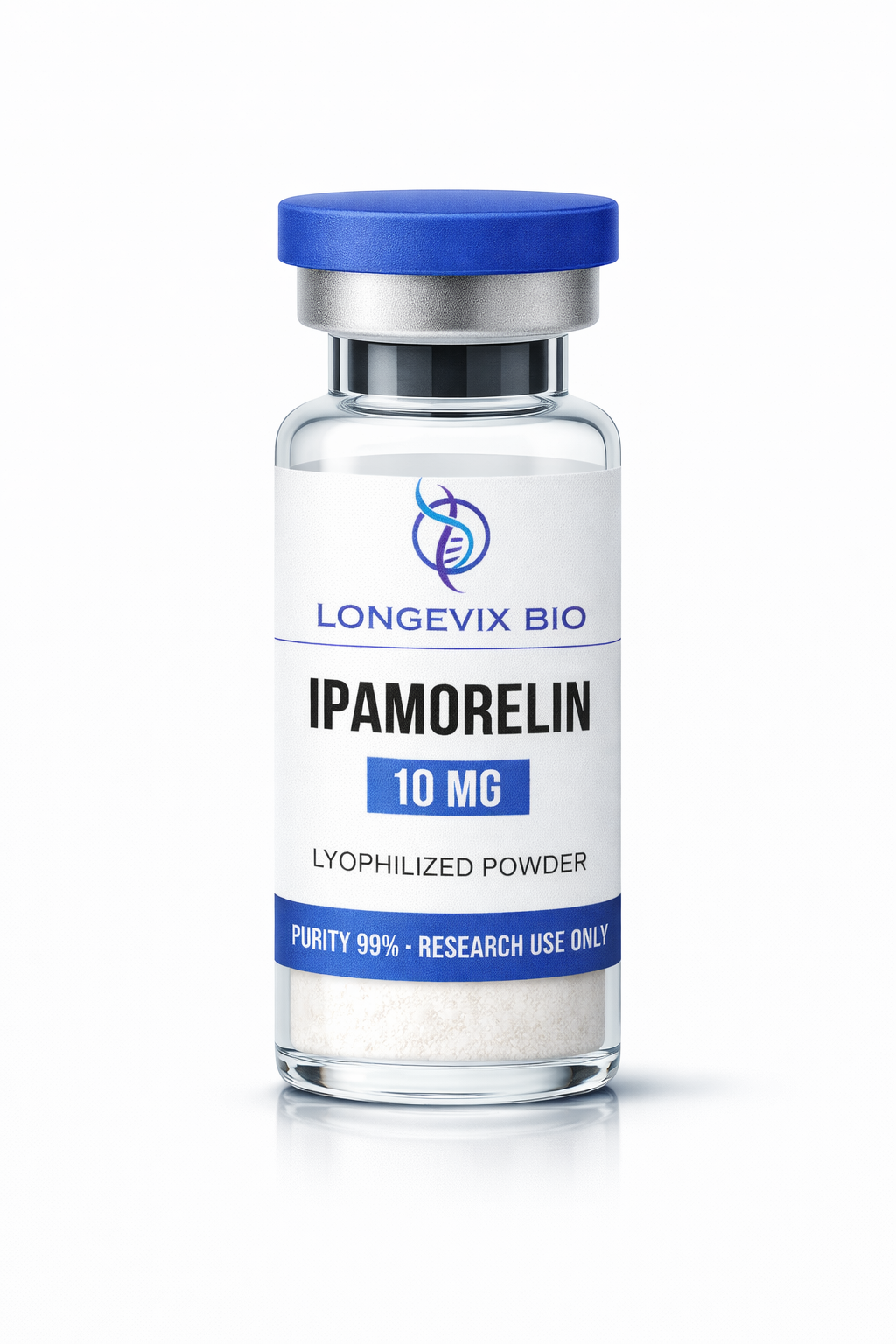
Ipamorelin — The Selective Growth Hormone Peptide
What Is It?
Ipamorelin is a synthetic pentapeptide classified as a growth hormone secretagogue receptor (GHSR) agonist, originally developed by Novo Nordisk in the late 1990s. It represents one of the most selective growth hormone-releasing peptides available, demonstrating minimal activation of secondary hormone pathways compared to other compounds in its class.
In simple terms — it signals the pituitary gland to release the body’s own growth hormone, rather than introducing any external hormone directly. And it does so very cleanly, without disturbing other hormonal systems.
For research purposes only. Not for human consumption.
What Are Researchers Studying It For?
💪 Muscle Growth & Body Composition Growth hormone increases cellular replication, encourages collagen synthesis in skeletal muscles, and stimulates the production of IGF-1, which helps regulate how the body creates and stores fat — leading to potential improvements in muscle strength and a decreased tendency for fat accumulation.
🔥 Fat Metabolism The GH surge triggered by Ipamorelin raises circulating IGF-1, which drives protein synthesis, lipolysis (fat breakdown), and tissue repair. This makes it a subject of interest in metabolic research.
😴 Sleep & Recovery Many research protocols explore using Ipamorelin at night to align with sleep-related hormone rhythms, as growth hormone is naturally released in greatest amounts during deep sleep. Better GH pulsatility may support deeper, more restorative rest.
🦴 Bone Health Animal studies have shown that Ipamorelin dose-dependently increased longitudinal bone growth rate, making it a point of interest in research around bone density and growth.
🔧 Tissue Repair Ipamorelin triggers cellular regeneration without increasing cortisol or other stress hormones — an important distinction for researchers studying recovery and tissue maintenance.
✨ Skin & Ageing Research has highlighted potential dermatological applications, with growth hormone’s regenerative signalling explored in relation to skin quality and structure.


Reviews
There are no reviews yet.